Power-driven vessel underway
- Look for
Masthead light + sidelights + sternlight.
- Important
- 50 metres or more: a second masthead light, abaft of and higher than the forward one. Under 50 metres may show one.
- COLREG reference
- Rule 23(a)

COLREG navigation lights use prescribed combinations of colour, position and arc of visibility. Read together, they help you work out which way another vessel is facing (her aspect) and what kind of vessel she is, or what she is doing, at night.
Recognising lights is one input. On its own it does not tell you whether a risk of collision exists or what action to take; that still depends on the rules that apply, the circumstances and a proper lookout by all available means.
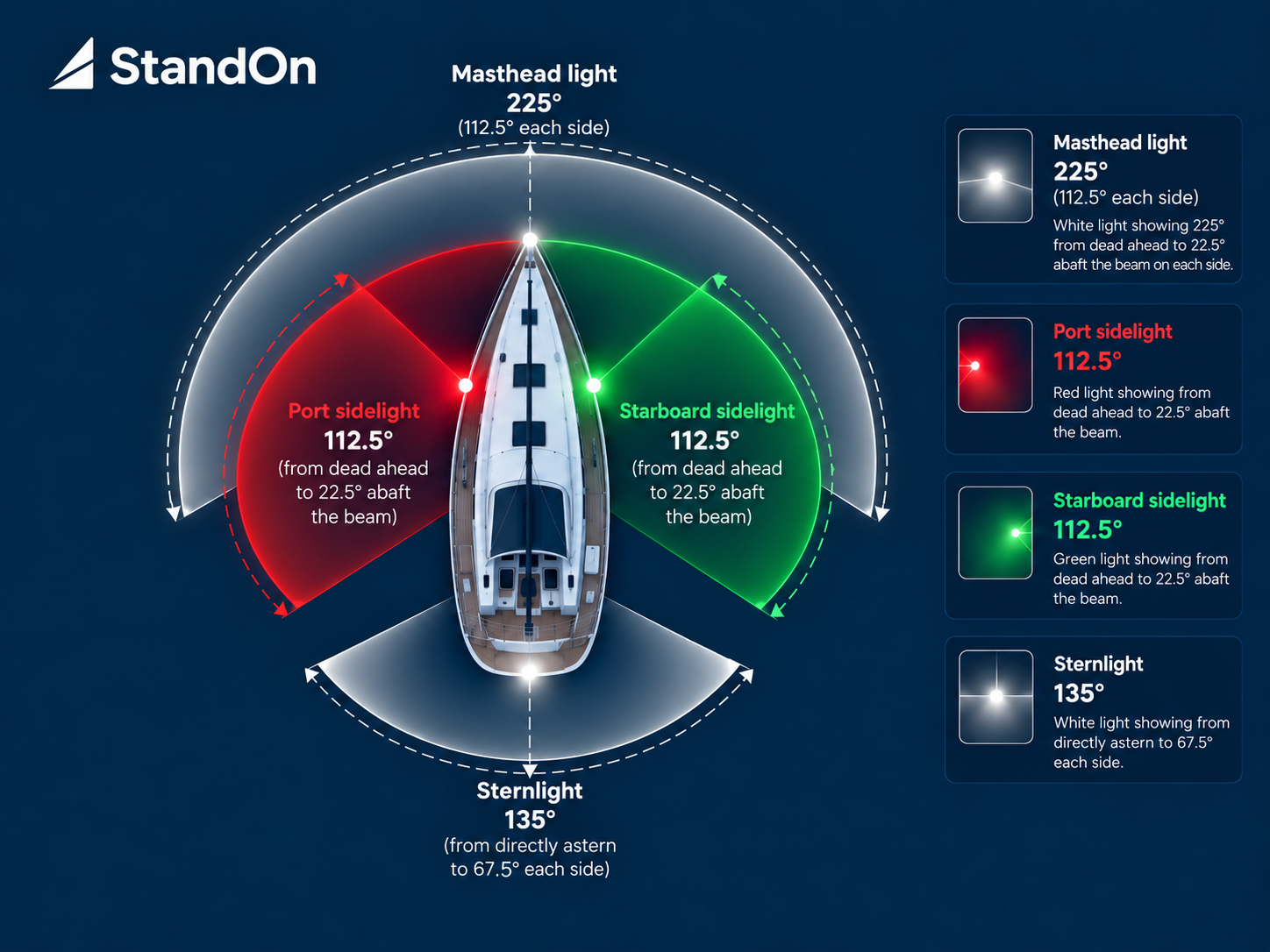
Lights are shown from sunset to sunrise and, if carried, in restricted visibility during daylight (Rule 20).
A single light rarely tells the whole story. A repeatable sequence helps:
These are summaries of common patterns, not a complete statement of each rule. Size thresholds and exceptions apply.
Masthead light + sidelights + sternlight.
Sidelights + sternlight. No masthead light.
Optional: red over green all-round lights at or near the top of the mast. Under 20 metres, the sidelights and sternlight may instead be combined in one lantern at or near the masthead.
Trawling: green over white.
Fishing other than trawling: red over white.
Both are all-round lights. Making way through the water: add sidelights + sternlight.
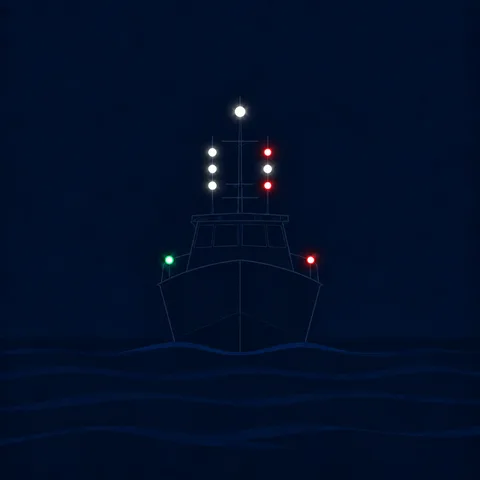
Red over red (all-round, in a vertical line).
Making way through the water: add sidelights + sternlight.
Red-white-red (all-round, in a vertical line).
Making way through the water: add masthead light(s), sidelights + sternlight.
White over red (all-round, at or near the masthead).
Underway: add sidelights + sternlight. At anchor: add anchor lights.
All-round white forward + a second, lower all-round white at or near the stern.
Anchor lights + red over red (all-round, in a vertical line).
The red lights are shown where they can best be seen.
By day, many of the same statuses are shown with day shapes.
Reading a light pattern once is not the same as recognising it quickly in the dark. StandOn Practice asks you to identify light combinations from memory, again and again over time, so weak areas show up early.
Navigation Lights is live in beta in StandOn. See the live question bank.
This page is a revision reference, not a complete guide to the COLREGs. It does not replace recognised training, official material, professional instruction or practical experience.
StandOn is an independent sailing revision platform and is not affiliated with or endorsed by the Royal Yachting Association.